
Stage Fright at Work: 16 Coaching Questions for the Hesitant Team Member
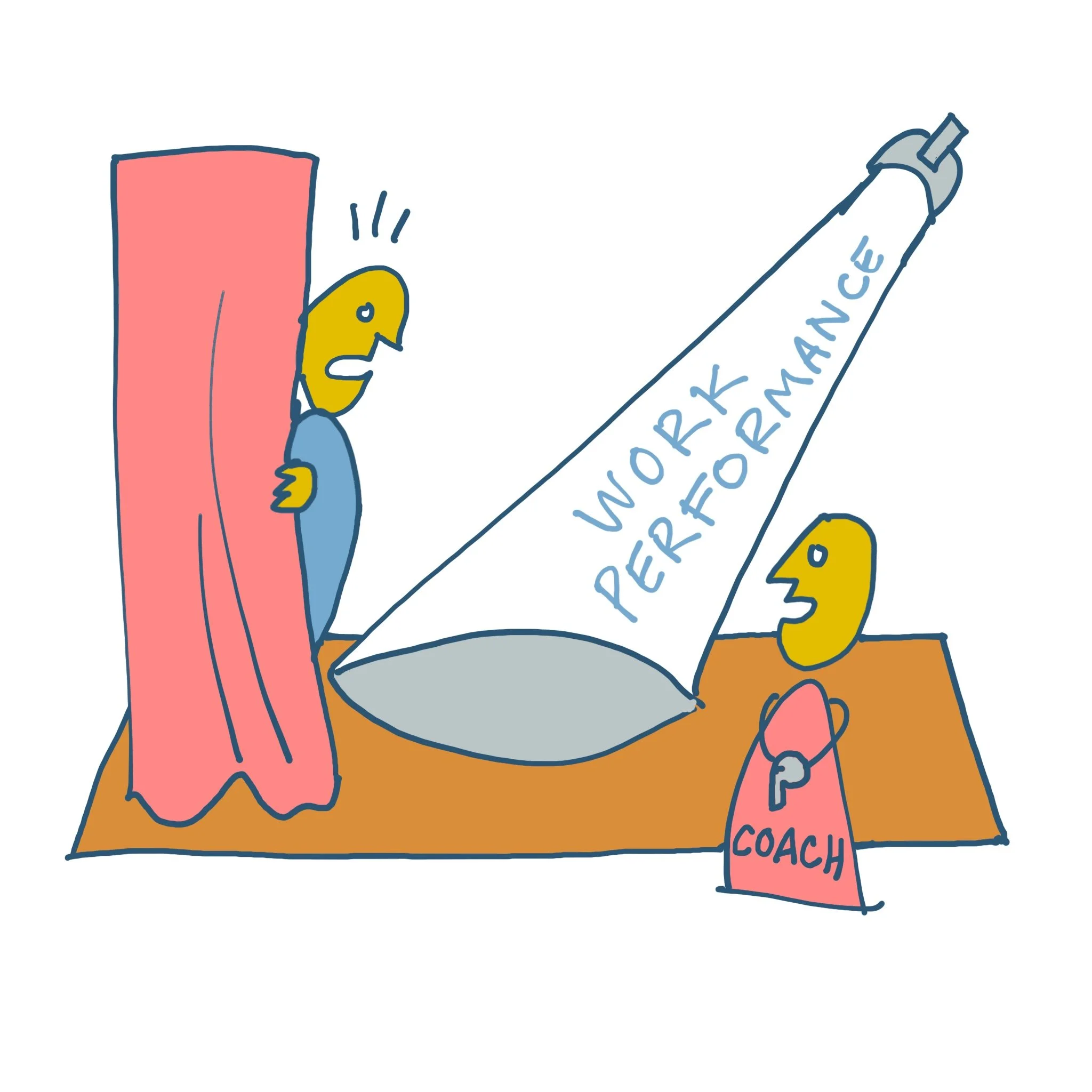
If you supervise a team, and your team has changed at all over the past two years, you probably have a hesitant performer on your team. Maybe more than one.
A hesitant performer is someone you know can do a good job and work independently without micromanagement, if they would just relax and go for it. Their anxiety, which we can think of as a kind of workplace stage fright, keeps them stuck.
You may recognize the signs: overthinking simple tasks, asking for repeated reassurance, delaying decisions, struggling to take initiative, or hesitating to communicate confidently with others. Often, these team members are capable, thoughtful people who are carrying around a level of fear that limits their growth.
This kind of anxiety is especially common in younger employees who may not yet have much professional experience. Add in some unique generational challenges (Zoom school during the pandemic, an ugly economy that limits opportunities, constant social comparison online) and hesitation starts to make a lot of sense when we look at this group as a larger demographic pattern.
Sometimes it comes from unclear expectations or uncertainty about authority and ownership. (That is another whole topic; see my blog on ownership ((Melinda, please link the Ownership blog here)) for more on that.) But when expectations are clear, training has been provided, and support is available, yet the employee is still frozen or hesitant, it is time to put on your coaching hat.
Coaching Instead of More Telling or Rescuing
Coaching is one of the most effective leadership approaches for developing people over time. Whether it is a soccer team or a workplace team, coaching helps people build confidence, judgment, and ownership.
Coaching is not about giving constant answers. It is about helping people think more clearly and trust themselves more fully.
One coaching website defines coaching this way:
“Coaching is the art of developmental communication, where you help people figure things out instead of telling them what to do.”
That definition captures something important. Hesitant performers often do not need more instructions. They need help untangling the worries, assumptions, and mental roadblocks that are keeping them from acting.
Another important thing about “coach” as a metaphor at work:
A coach is not on the playing field. At work, this means the supervisor-coach does not take the work that is causing hesitation onto their own plate. “I’ll just do it” is easy in the moment, but it creates dependency and keeps you busy with things you want the hesitant person to do.
Good coaching questions can help with that.
Coaching Questions for Hesitant Performers
Leadership expert Michael Bungay Stanier has a list of core coaching questions in his book The Coaching Habit. Here are some of those questions, and a few others that I like, that work beautifully in one-on-one meetings with hesitant team members.
“What’s on your mind?”
This is Stanier’s “Kickstart Question.” Instead of immediately diving into status updates or problem-solving, you are inviting the person to surface what actually feels important to them.
“And what else?”
This simple follow-up question is powerful. Someone’s first response to “what’s on your mind?” or “what do you want to discuss?” is usually the safest or most obvious response. “And what else?” helps them go deeper and often reveals the real concern.
“What’s the real challenge here for you?”
This question helps with focus. Hesitant performers are often overwhelmed by a vague cloud of worry. Focus reduces anxiety immediately.
Additional coaching questions that work well here are:
What have you already tried?
What roadblocks or limitations do you anticipate?
Is there anything important you do not yet know?
What part of this feels most uncomfortable?
These conversations can be eye-opening. I am often impressed by the worries people carry around, worries that make emotional sense but are either:
completely outside their control,
unrelated to the actual issue at hand, or
not actually a problem at all.
“What do you want?”
This is Stanier’s “Foundation Question.” Hesitant employees can be so focused on avoiding mistakes that they aren’t thinking about what success would actually look like. This question reconnects them to purpose and desired outcomes.
“How can I help?”
This question clarifies your role. Do they want advice? Encouragement? A sounding board? Help prioritizing? Permission to make a decision?
Managers often jump into fixing mode too quickly. Asking this question first leads to better support and reinforces ownership.
“What was most useful for you?”
Stanier calls this the “Learning Question.” Ending conversations this way helps employees reflect on their own growth and learning process. It also helps you become a more effective coach over time.
Additional Questions That Build Confidence
Beyond Stanier’s framework, here are a few more questions I find helpful with hesitant performers:
Who on the team can help you with their time, expertise, or resources?
What have you done before that relates to this challenge?
What strengths or past experiences can you draw from here?
How will you know you are making progress?
What is something you want to learn more about to help you succeed in this role?
These questions help people recognize that they are often more equipped than they think they are.
The Miracle Question
Last one: For long-running obstacles where someone stays stuck, I like a version of the “miracle question” from solution-focused therapy. (One of my favorite trainings when I was doing direct practice social work. Shout out social worker Insoo Kim Berg for this model she created.)
The miracle question is a version of this: “Suppose a miracle happened overnight and this problem was solved. You walk into work tomorrow. How would you know the miracle happened? What would you see? What would be different?”
For example, imagine an employee who avoids speaking up in meetings because they are afraid of sounding inexperienced. You could ask: “What would tomorrow’s meeting look like if the fear was gone?”
They might say: “I would ask questions instead of continuing to work with these blind spots.”
Now you are talking about observable behaviors instead of vague emotions. The problem becomes more workable.
Coaching Helps People Grow Into Confidence
Many hesitant performers are not lazy, disengaged, or incapable. They are simply carrying too much fear into situations that require action and experimentation. And it’s hard to get that confidence without getting out there on the work stage and trying things. Confidence comes after people take small risks, survive them, and realize they are more capable than they thought.
That is why coaching matters. A good coach does not remove every obstacle or provide every answer. A good coach helps people build the internal skills to move forward anyway.
Sometimes the best thing a leader can do is ask one calm, thoughtful question—and then listen.