
Favoritism: When ‘I Just Really Like Them’ Turns Into a Leadership Problem
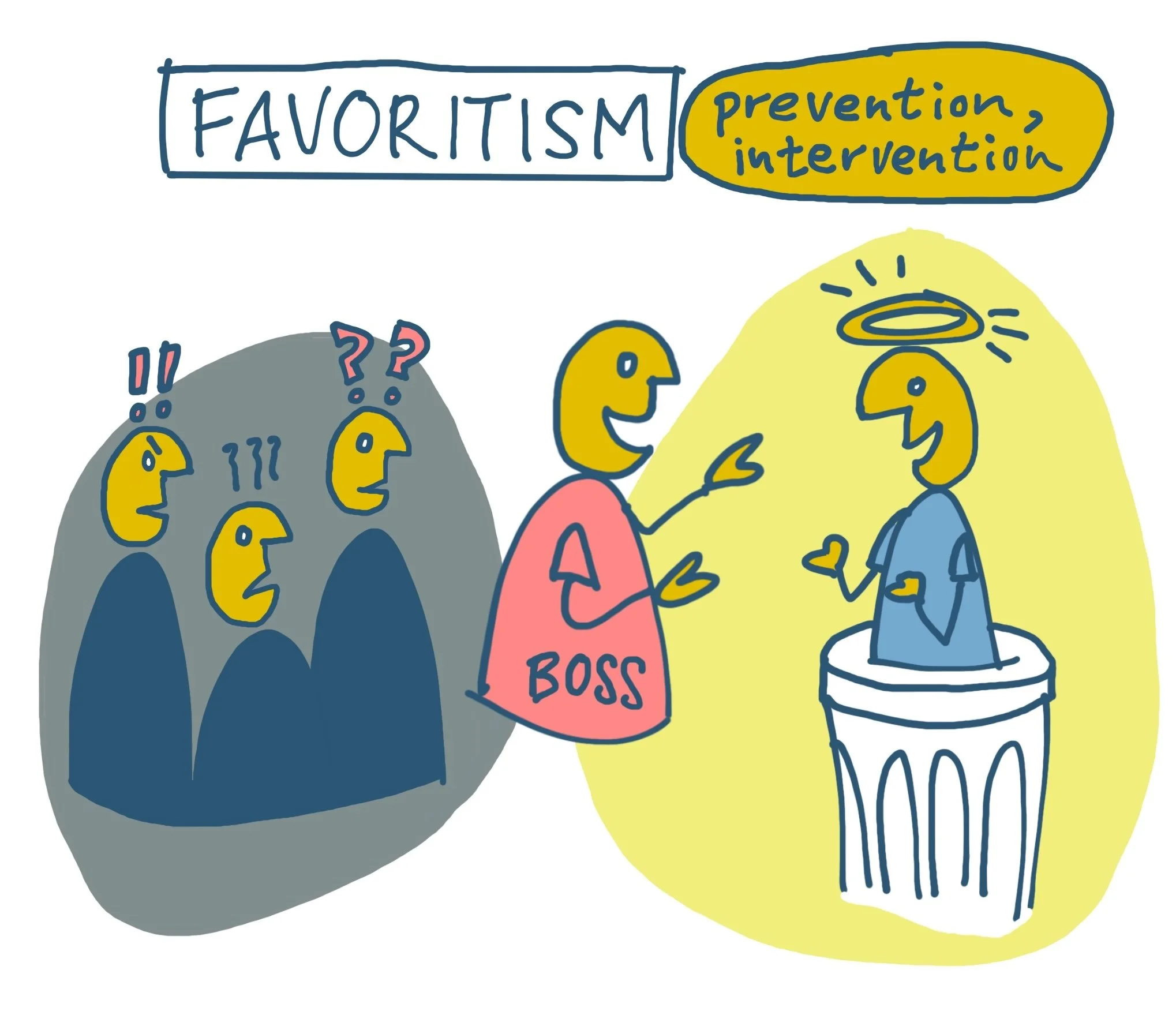
If you have ever been on either side of favoritism at work, either the boss accused of it, or a team member feeling victim to it, you know favoritism can be an aggravating, even explosive, issue.
Favoritism at work is where a leader or person in power provides greater opportunities, benefits, and attention to specific individuals over others.
The wise supervisor or project lead works to avoid it. The wise team member can be artful in addressing it.
Any supervisor or project lead will find themselves connecting better with some team members than others, naturally. It is also natural for certain team members to excel, completing quality work with greater ease and momentum, making them a favorite simply because they get stuff done.
However, even when rooted in genuine working efficiency, favoritism, and even the perception of favoritism, is a significant problem. Navigating this delicate balance requires self-awareness, transparency, and a committed focus on humble leadership.
The Distinction: Feelings Versus Behaviors
To understand favoritism, we must distinguish between internal feelings (who likes whom) and observable behaviors. While a supervisor may naturally prefer working with someone who is resourceful, clear about their needs, and consistently delivers quality work on time, we want to be careful about how this preference guides our actions with a team.
When preference crosses the line into favoritism, we see specific behaviors emerge from the person in power. Examples:
Unequal Opportunity: Providing high-profile projects, promotions, or advanced opportunities to some people, while leaving others out.
Selective Forgiveness: Excusing the mistakes of certain individuals while holding others to a harsher standard.
Discounted Contributions: Welcoming and seriously considering the ideas of some team members, but ignoring or discounting those of others.
When leaders shows with these kind of behaviors that there are favorites and less-favorites on the team, the effect on the wider team is profound. It is demoralizing and can be perceived as unfair, even potentially discriminatory, to recognize good work only in certain individuals or promote someone without ensuring others had a fair chance.
The Humble Leader’s Responsibility: Transparency and Self-Awareness
For leaders committed to fairness, the suggestion that they might be playing favorites can be uncomfortable and may even feel unfair. Prevention of (even the perception of) favoritism can help keep us out of that awkward position of defending ourselves as we lead the team. Here are ways to organize decision-making and communication to manage perceptions of favoritism:
1. Establish Specific Criteria: The most crucial step in avoiding the pitfalls of perceived favoritism is transparency in decision-making. When making important decisions about career advancement or opportunities—such as who gets a promotion or who is assigned to the exciting, new high-profile project—the supervisor must establish specific, clear criteria. These criteria should be well-defined and easily explainable. By using objective standards, the focus remains on merit and capability rather than personal rapport.
2. Assess Your Preferences and Habits: Pause to reflect: How often am I recognizing certain individuals and not others? Do I interrupt some of my team members in meetings?
Ask a trusted colleague: “Do you see me playing favorites in a way that could seem unfair to other team members?” It’s natural to want to listen more closely to people you connect with. And those in positions of power have a professional obligation to listen to everyone who communicates respectfully. This awareness requires checking your own blind spots to ensure all voices are being heard and valued.
When You Think Favoritism is Working Against You
If you feel you are being excluded or treated unfairly due to favoritism, approach the situation with documentation, curiosity, and a focus on fairness. Steer clear of a finger-pointing stance, as raisingissues of fairness will make most people defensive.
1. Document Specifically: The first step is to document the situation. This documentation should detail what happened, who was involved, exactly who received preferential treatment, and any knowledge you have about how that decision was made. Specificity helps you provide this risky feedback in a calm, organized way. With facts not feelings.
2. Engage with Curiosity: Depending on the strength and security of the relationship, you may choose to approach the person directly. Focus on fairness, and maintain an open and curious approach. You are seeking to understand, not to establish guilt and misdeeds like a TV detective. You could phrase the conversation by saying something like: “I was hoping to be considered for that opportunity. Can you tell me how that decision was made?” This approach focuses on understanding the process rather than levying accusations. Facts not feelings.
3. Consider Escalation, Carefully: If the perceived problem is significant and long-standing, you might consider taking your concerns to the human resources department. This is a serious move with political (i.e., power relationships) implications for both you and the person you believe is acting unfairly. This serious step requires careful consideration.
Whether you are the leader striving for humble transparency or the employee seeking fairness, navigating favoritism means acknowledging the human element while establishing objective professional standards for opportunities. And particularly for supervisors, not counting any team member out when it comes to encouraging good ideas and individual growth.